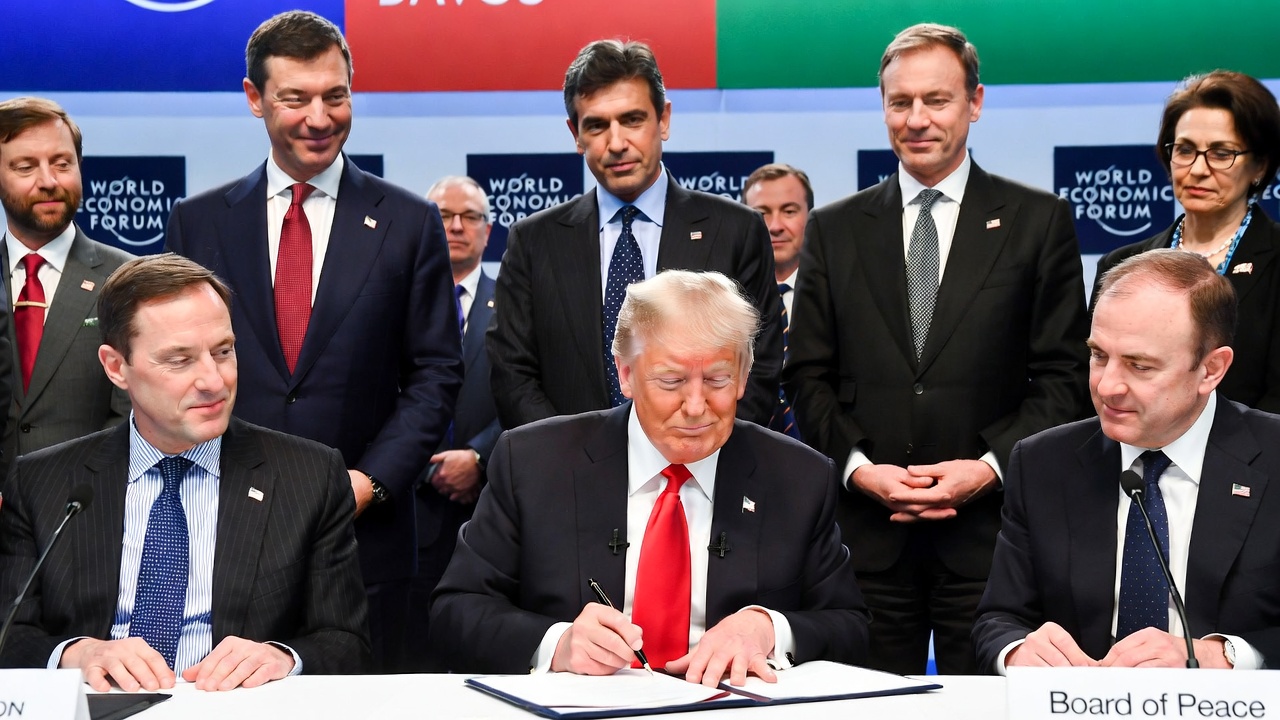
Have you ever wondered what happens when a bold peace proposal clashes with ongoing global tensions? That’s the scene unfolding at the World Economic Forum in Davos, where the UK has chosen to step back from Donald Trump’s new Board of Peace.
Britain’s Foreign Secretary Yvette Cooper made it clear that her country backs efforts to end the fighting in Gaza. Yet, she pointed out that the board goes beyond that single conflict. It sets up a fresh international group with Trump at the helm, holding significant sway over decisions.
Cooper stressed that the UK got an invite but won’t put pen to paper at today’s event. The big sticking point? Russian President Vladimir Putin’s potential spot on the board. With Russia’s actions in Ukraine still fresh, Britain sees this as a red flag.
Decoding Trump’s Board of Peace: What’s It All About?
Trump rolled out the Board of Peace as a game-changer for handling disputes around the world. He positions it as a tool to foster lasting calm, starting with rebuilding Gaza after the Israel-Hamas clash.
At the Davos signing, Trump stood with heads from 19 nations, calling the board one of the biggest setups ever. He promised it would ensure Gaza gets demilitarized, well-managed, and revamped.
Key highlights from the board’s setup include:
- Trump’s Role: He chairs the group and picks key members.
- Membership Perks: Countries pony up $1 billion for a lasting seat.
- Broad Reach: The charter talks about stability and good governance in troubled spots, not just Gaza.
Trump insists this isn’t meant to shove the United Nations aside. Instead, he plans to team up with the UN for results.
Why the UK Is Holding Back
Cooper spoke openly about Britain’s qualms. She praised Trump’s 20-step Gaza strategy and said the UK wants in on the next phase of peace talks.
But the board’s treaty touches on wider matters. Cooper flagged worries over Putin joining a peace-focused body while showing no real intent to end the Ukraine conflict.
Britain has stood firm by Ukraine’s side, even teaming with France on possible troop deployments if a deal emerges. This stance makes Putin’s invite a tough pill to swallow.
On top of that, recent US-UK friction over Greenland added strain, though Trump eased off on tariffs and force threats after NATO chats.
Who’s In and Who’s Watching from the Sidelines?
The ceremony drew leaders from places like Argentina, Hungary, Morocco, Saudi Arabia, and Turkey. More jumped on board, such as Pakistan, Egypt, and Qatar. Even the Vatican noted an invite for the Pope.
Putin got a nod from Trump but hasn’t bitten yet. He mentioned talks on using frozen Russian funds as a buy-in.
Notably, big UN Security Council players—China, France, Russia, and the UK—haven’t committed. This leaves the board’s clout in question.
The executive team features heavy hitters: US Secretary of State Marco Rubio, envoy Steve Witkoff, Jared Kushner, and ex-UK PM Tony Blair.
Looking Ahead: Peace or Power Play?
As Trump meets Ukraine’s Volodymyr Zelensky in Davos, eyes turn to whether this board sparks real change or stirs more division. Britain pledges ongoing talks with allies, hinting at possible future involvement if concerns fade.
In a world craving stability, Trump’s Board of Peace tests if bold moves can bridge deep rifts—or widen them further.
Discover why Britain is pausing on Donald Trump’s Board of Peace amid fears of Vladimir Putin’s role in the Gaza reconstruction effort.
Related reading on our site: → Click Here.
For more details, click here