
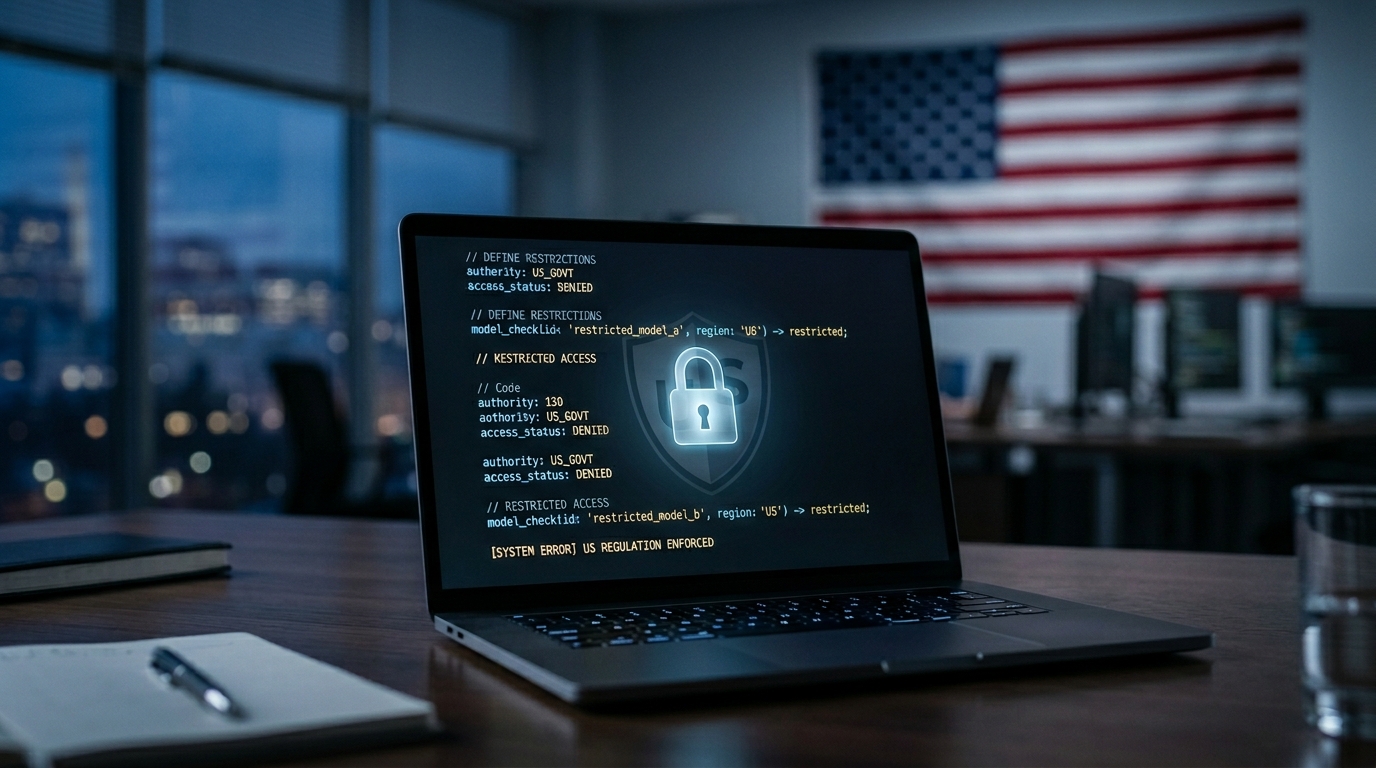
Claude Fable 5 and Mythos 5 now sit at the center of a major technology dispute in the United States. The U.S. government has ordered Anthropic to restrict access to the two advanced Claude models for foreign nationals. The decision has raised new questions about national security, cybersecurity, and the future of powerful technology tools.
The order does not mean the U.S. has completely banned Claude. It targets two specific models: Claude Fable 5 and Claude Mythos 5. Other Claude models remain available, according to Anthropic.
Many users online have called the move a “Claude ban.” That phrase can mislead readers. A more accurate description is this: the U.S. has restricted access to Anthropic’s newest Claude models because officials see possible security risks.
What Happened?
Anthropic launched Claude Fable 5 and Claude Mythos 5 in June 2026. The company described Fable 5 as one of its most capable models for coding, research, vision, and complex work.
Mythos 5 had a more limited purpose. Anthropic designed it for trusted cybersecurity partners and approved users. The company said Mythos 5 shared the same core model as Fable 5, but allowed deeper use in some cyber areas.
Soon after launch, the U.S. government issued an export control directive. The order told Anthropic to suspend access to Fable 5 and Mythos 5 for foreign nationals.
Anthropic said the rule created a major compliance problem. The company could not quickly separate every allowed user from every restricted user. As a result, it disabled Fable 5 and Mythos 5 for all customers while it worked on the issue.
Why Did the U.S. Take Action?
The U.S. government cited national security concerns. Officials worried that foreign users could misuse the models in sensitive cyber work.
The concern appears to focus on software vulnerabilities. In simple terms, powerful models can help experts find weak points in software. Security teams use that ability to fix problems. Attackers could also misuse it to search for flaws.
That creates a difficult balance. Cyber defenders need strong tools. Governments also want to stop hostile groups from gaining new attack methods.
This case shows how serious the issue has become. The U.S. has long used export controls for chips and advanced hardware. Now, the debate has moved to model access as well.
Is Claude Banned in the United States?
No, Claude has not been fully banned in the United States.
The restriction affects Claude Fable 5 and Mythos 5. It does not apply to every Claude product. Anthropic said access to its other models remains unaffected.
This distinction matters for readers. A headline that says “Claude banned in USA” may attract clicks, but it does not explain the full story. A clear headline builds more trust.
Better wording would be: “U.S. Restricts Access to Claude Fable 5 and Mythos 5.”
Why Fable 5 and Mythos 5 Matter
Fable 5 and Mythos 5 drew attention because of their advanced capabilities. Anthropic said Fable 5 could handle complex software engineering, research, and long tasks better than earlier Claude models.
Mythos 5 carried extra sensitivity because of its cyber focus. Anthropic planned to offer it to trusted cyber defenders and infrastructure providers. That made it useful for security work, but also more sensitive from a government point of view.
The same tool can help both sides of cybersecurity. It can help defenders find flaws before attackers do. It can also raise fears if bad actors gain access.
That is the main reason this story matters.
Impact on Users
Regular Claude users may not notice a change if they use older or different Claude models. The restriction focuses on Fable 5 and Mythos 5.
Developers and companies that planned to use the new models may face delays. Some teams may need to return to older Claude models. Others may test tools from different providers.
Users outside the United States may see the biggest impact. The order focuses on foreign nationals, including those living inside the U.S.
That detail has caused concern in the technology industry. Many tech companies employ international workers. Some teams now worry that citizenship or nationality rules could affect access to future tools.
Impact on Businesses
The decision sends a strong message to businesses. Companies cannot assume that access to advanced tools will always stay open.
A business may build a product around one model. Then a government order, safety review, or policy change can disrupt access. That risk matters for software companies, security firms, banks, universities, and cloud customers.
Many companies may now look for backup options. Some may use several providers at the same time. Others may explore open-source or self-hosted systems.
The lesson is simple. Businesses need flexibility. They should not rely on one provider for every critical task.
Anthropic’s Response
Anthropic disagreed with the broad impact of the order. The company said the concern appeared narrow. It also said it had worked with government partners before launching the models.
At the same time, Anthropic said it would comply with the directive. The company also said it wanted to restore access as soon as possible.
The company warned that similar standards could affect the wider industry. If regulators apply the same approach to every advanced model, many future launches could face delays.
Why This Story Could Shape Future Policy
This case may become an important moment for technology regulation. It shows that governments may no longer focus only on chips, data centers, and hardware.
They may also control access to advanced models. That could change how companies launch new products. It could also affect international users, researchers, and developers.
The biggest challenge is balance. Governments want to protect national security. Companies want to release useful tools. Cyber defenders want better systems. Users want reliable access.
No side has an easy answer.
What Happens Next?
Anthropic may continue talks with U.S. officials. The company may also build stronger access controls for Fable 5 and Mythos 5.
Future access could require stricter identity checks. Some users may need to prove location, company status, or citizenship. Approved cybersecurity partners may also face extra review.
Other companies will watch this case closely. If the U.S. uses similar rules again, the entire technology industry may adjust its launch plans.
Bottom Line
The U.S. has not banned Claude completely. It has restricted access to Claude Fable 5 and Mythos 5 because of national security and cybersecurity concerns.
The story matters because it goes beyond one company. It shows how governments may regulate advanced technology in the years ahead.
For users, the key point is clear. Other Claude models remain available, but Fable 5 and Mythos 5 face major access limits.
For businesses, the message is also clear. Build backup plans. Follow official updates. Avoid relying on one tool for every important task.
For readers, the best approach is to ignore viral claims and focus on verified facts.